WHAT IS TEDAIM—AND WHY IT WORKS
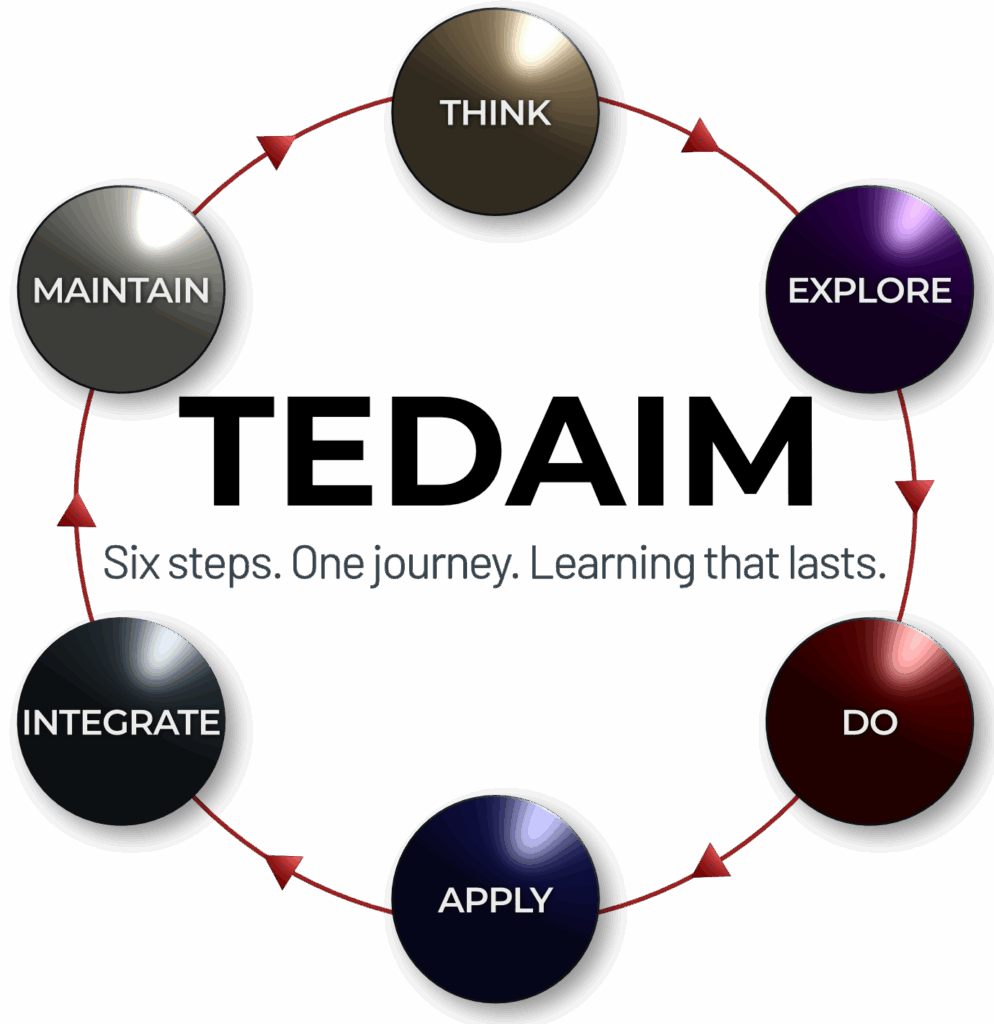
The TEDAIM model—Think, Explore, Do, Apply, Integrate, Maintain—is a localised framework designed to guide lifelong learners through a structured yet flexible process. Whether you’re upskilling for a new job, diving into a passion project, or simply staying mentally sharp, TEDAIM supports deep, sustainable growth.
20 PRINCIPLES FOR USING TEDAIM IN REAL LIFE
To bring the model to life, apply these habits across each stage.
THINKING
- Define your learning needs clearly.
- Set intentions with personal relevance.
- Visualise how learning could change your life.
- Identify any restrictive beliefs that may be blocking your growth.
EXPLORING
- Research broadly—start wide before narrowing your focus.
- Mix formats: books, podcasts, conversations.
- Stay curious even if it gets tough.
DOING
- Try short tasks, even if imperfect.
- Join workshops or create mini-projects.
- Learn by failing forward.
APPLYING
- Utilise your skills in your job, at home, or in your business.
- Reflect on results—what’s improving?.
- Document your experience.
INTEGRATING
- Look for ways to integrate your new knowledge into various aspects of your life.
- Establish systems, habits, or workflows to facilitate ongoing use.
- Connect your learning to bigger goals or projects that matter.
MAINTAINING
- Schedule regular reviews.
- Update knowledge as things change.
- Keep learning visible—use boards, journals, and reflections.
- Celebrate milestones to boost motivation and track growth.
10 STEPS TO MAKE TEDAIM WORK FOR YOU
Follow these to bring structure and rhythm to your learning:
- Identify a topic or goal.
- Ask yourself why it matters.
- Do a quick scan of available resources.
- Map out a learning journey with milestones.
- Start with low-risk experiments.
- Use new skills in a real setting.
- Track your outcomes.
- Discuss your learning experiences—whether online or offline.
- Build systems that reinforce success.
- Revisit, revise, and recommit.
5 TIPS FOR TEDAIM MOMENTUM
- Use a Visual Tracker: Map your TEDAIM stages.
- Set a Weekly Learning Time: Routine = retention.
- Buddy Up: Learning with others builds accountability.
- Celebrate Milestones: Reward progress.
- Stay Open: Allow your learning path to evolve.
KEY TAKEAWAYS
- TEDAIM brings clarity to the chaos of adult learning.
- It suits any context—whether studying, working, or being creative.
- The model balances exploration with discipline.
- Reflecting is just as important as doing.
- South Africans can lead their learning journeys without a degree.
TRY THIS
Pick something you’ve wanted to learn—coding, budgeting, isiZulu, design, anything. Run it through TEDAIM for a week. See what shifts when you learn with purpose and process.
Need more help? Explore our Resources Library—featuring free downloads, templates, and planning tools specifically designed for South Africans.